
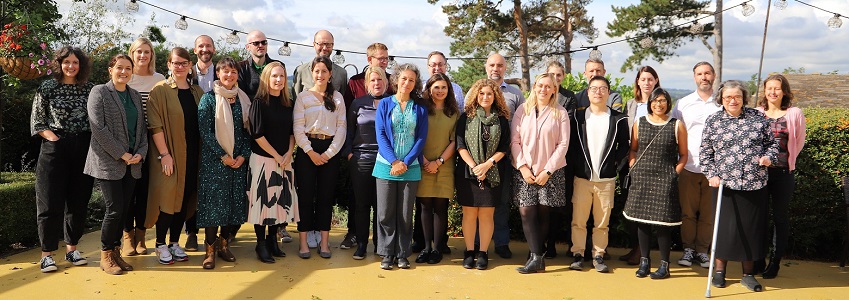
Meet our amazing team of staff who are working to bring our vision to life!
Challenge Leads

Colin Foster
Challenge Lead, Professor of Mathematics Education
Colin is a Professor of Mathematics Education in the Department of Mathematics Education at Loughborough University. Colin is leading Challenge 5 within CEML, addressing the translation of research into practice.

Camilla Gilmore
Principal Investigator and Challenge Lead, Professor in Mathematical Cognition
Camilla is a Professor of Mathematical Cognition in the Department of Mathematics Education. Camilla is the principal investigator of CEML and is Lead for Challenge 1, focusing on early development of mathematics skills.
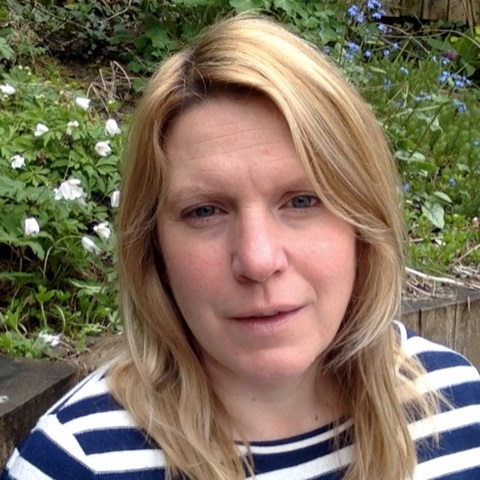
Silke Göbel
Challenge Lead, Professor – Psychology
Silke is a Professor at the Department of Psychology at the University of York (UK). There she runs the Numerical Cognition Lab.
At CEML Silke leads Challenge 2 and contributes to Challenge 1.

Matthew Inglis
Capacity and Career Development Lead, Professor of Mathematical Cognition
Matthew is Professor of Mathematical Cognition in the Department of Mathematics Education at Loughborough University. Matthew leads on CEML’s capacity building work, and contributes to Challenges 2 and 5.

Tim Jay
Challenge Lead, Professor of Psychology of Education
Tim is Faculty APVC for Research and Knowledge Exchange in Social Science, and Professor of Psychology of Education, at University of Nottingham. Tim leads work on Challenge 3 in CEML, which explores the ways in which children learn mathematics through interactions with others both in the classroom and at home.
Collaborators

Krzyzstof Cipora
Associate Professor and Co-Leader of Mathematical Cognition and Learning Lab, Jagiellonian University in Kraków, Poland
From 2020 to 2025 Krzysztof worked as Lecturer and Senior Lecturer at Department of Mathematics Education, Loughborough University, and then returned to his Alma Mater, Jagiellonian University in Kraków, Poland. Krzysztof’s responsibility within CEML is methodological support, especially quantitative research methods, with a particular focus on looking into individual prevalence of observed effects. He is also involved in training and capacity building activities, as well as data management. Krzyzstof is also a Visiting Fellow at Department of Mathematics Education, Loughborough University.

Korbinian Moeller
Challenge Lead, Professor of Mathematical Cognition
Korbinian is a Professor of Mathematical Cognition. Korbinian is heading Challenge 4 on the design of effective educational resources based on a better understanding of mathematical learning processes.
Co-Investigators

Julia Bahnmüller
Senior Lecturer in Mathematical Cognition, Loughborough University
Julia is a senior lecturer in Mathematical Cognition in the Centre for Mathematical Cognition at Loughborough University. Within CEML, Julia contributes to the identification of causal mechanisms that drive mathematics learning during primary school and how these can be used to inform the design of effective educational resources.
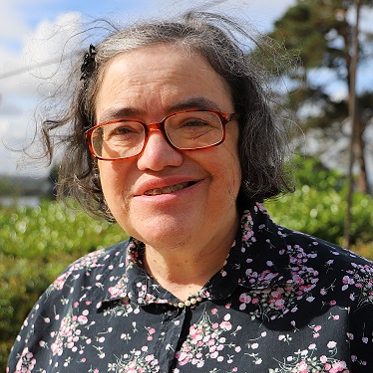
Ann Dowker
College Lecturer in Psychology, University of Oxford
Ann Dowker is a University Research Lecturer at the Department of Experimental Psychology, University of Oxford.

Paul Howard-Jones
Professor of Neuroscience and Education, University of Bristol
Paul helps to turn the insights from CEML into resources and communications that support teachers’ efforts to foster young children’s mathematics. In particular, he attempts to understand how teachers already think about children’s learning and development in this area, and how scientific understanding can feed into that thinking and enhance their practice.

Hugo Lortie-Forgues
Senior Lecturer, Loughborough University
Hugo is a Senior Lecturer in the Centre for Mathematical Cognition at Loughborough University.

Andrew Manches
Professor of Children and Technology, University of Edinburgh
Dr Andrew Manches is a Professor of Children and Technology at the University of Edinburgh, where he leads the Children and Technology group as co-director of the Digital Education Research Centre. Andrew draws upon his career experience in early years teaching and industry to support the design, development and promotion of resources from CEML. He also contributes his theoretical knowledge of the role of embodiment in early numerical learning and the potential for emerging technologies.

Kinga Morsanyi
Reader in Mathematical Cognition, Loughborough University
Kinga is a Reader in Mathematical Cognition in the Department of Mathematics Education. Kinga is interested in the development of mathematical thinking and mathematics-related feelings and attitudes in both typical development and in special populations (including children with dyscalculia and autism).

Gaia Scerif
Professor of Developmental Cognitive Neuroscience, University of Oxford
Gaia has been based in the Department of Experimental Psychology at the University of Oxford since October 2006, where she is a Professor of Developmental Cognitive Neuroscience. Her research focuses on the development of attentional control and executive functions from early childhood into primary school, from their neural correlates to their outcomes on emerging cognitive abilities such as emerging mathematics learning. Gaia believes that this is an important focus because attention influences how we learn and behave in everyday situations, and it is particularly relevant in the classroom.

Francesco Sella
Senior Lecturer, Department of Mathematics Education, Loughborough University
Francesco is a Senior lecturer in the Department of Mathematics Education, and his research focuses on understanding and improving early numeracy. Within the CEML, Francesco contributes to creating novel methodologies to assess the development of early numerical skills (challenge 1) and supports the development and evaluation of educational resources to improve mathematical learning (challenge 4).

Sam Sims
Associate Professor, University College London
Sam Sims is an Associate Professor in the Centre for Education Policy and Equalising Opportunities (CEPEO) at UCL. His research focuses on teachers, teaching, and teacher professional development. Sam teaches evaluation methods at UCL and has also published research on this topic. As part of CEML, Sam helps to design and evaluate the cost-effectiveness of training for early maths educators. You can find him on Twitter @DrSamSims.

Victoria Simms
Professor in Psychology, Loughborough University
Victoria is a Professor of Developmental Psychology at Loughborough University. In CEML Victoria contributes to research on creating measures suitable to track development in the early years (Challenge 1) and understanding the home environment and it’s influences (Challenge 3). Victoria is also a member of CEML’s capacity building, Impact and career development committee.

Elizabeth Stokoe
Professor, The London School of Economics and Political Science
Elizabeth Stokoe works in the Department of Psychological and Behavioural Science at London School of Economics. She is also an Honorary Professor at Loughborough University, UK and Professor II at the University of Southeastern Norway. Liz will work particularly with Dr Natalie Flint and Prof Tim Jay on Challenge 3, analysing the social interactions between children, teachers, and parents about mathematics – both formally and tacitly – to help us better understand the contexts in which mathematical knowledge and skills evolve.

Iro Xenidou-Dervou
Reader in Mathematical Cognition, Department of Mathematics Education, Loughborough University
Within the CEML, Iro helps to develop novel methods for the sensitive assessment of numerical skills in the early years and examine how domain-general cognitive skills (e.g., executive functions) support early mathematical learning.
Post-Doctoral Research Associates

Natalie Flint
Postdoctoral Research Associate, Centre for Early Mathematics Learning, Loughborough University
Natalie is a Research Associate in CEML working on Challenge 3 which explores the ways in which children experience learning mathematics. Challenge 3 analyses the interactions children have with others both in the classroom and at home. Natalie’s research interests are in talk and social interaction: namely, Conversation Analysis (CA) and Membership Categorisation Analysis (MCA) of interactions in a variety of contexts.

Tabea-Maria Haase
Postdoctoral Research Associate, Centre for Early Mathematics Learning, Loughborough University
Tabea is a Research Associate in CEML working on Challenge 2, which aims to provide large-scale causal evidence of the mechanisms of mathematical learning during primary school years. Previously, she was a Research Associate in the Numerical Cognition Lab in the Department of Psychology, University of York. Her research focused on the developmental aspect of delineating the spatial versus non-spatial nature of conceptual number knowledge. She mainly uses behavioural, eye tracking and Magnetoencephalography research methodology. Tabea completed a Cotutelle PhD at the University of Bristol and Macquarie University in 2024, where she investigated visual perception.

Liz Hewitt
Postdoctoral Research Associate, Centre for Early Mathematics Learning, Loughborough University
Liz works on Challenge 5 which explores how to effectively communicate research to teachers and educators. Liz has previously worked as a primary school teacher and teacher educator. Her PhD examined teacher thinking in relation to supporting classroom talk in primary science. She focuses on qualitative research, most recently in teacher professional development. She joined CEML in April 2026.

Hanna Weiers
Postdoctoral Research Associate, Centre for Early Mathematics Learning, Loughborough University
Hanna is a Research Associate in CEML working across Challenges 1 and 2, with the focus on Challenge 1, which studies the emergence of key mathematics skills in the early years. Challenge 1 is running a series of studies with 2- and 3-year-olds to investigate how children develop an understanding of the first number words and a large-scale longitudinal study to track how children’s numerical skills develop between the ages of 3 and 4. Hanna is passionate about trying to develop new methods suitable to use with toddlers to study the emergence of early mathematics skills.

Franz Wortha
Postdoctoral Research Associate, Centre for Early Mathematics Learning, Loughborough University
Franz is a Research Associate in CEML with a technical focus. He contributes his expertise in statistical and machine learning modelling approaches across challenges. Franz aims to use state of the art analyses to investigate self-regulation and self-regulated learning processes, especially when learning with technologies.

Silke Wortha
Postdoctoral Research Associate, Centre for Early Mathematics Learning, Loughborough University
Silke studied Cognitive Science at the University of Tübingen, Germany (B.Sc. and M.Sc. in cognitive science). Subsequently, she pursued her PhD in Psychology at the LEAD Graduate School at the University of Tübingen. In 2020 she became a postdoctoral researcher at the University Medicine Greifswald, Germany. She joined CEML as a postdoctoral research associate working on Challenge 4 in November 2024.
Research Assistants

Christina Davidson
Research Assistant, Centre for Early Mathematics Learning, Loughborough University
Christina completed her bachelor’s degree in Psychology at the University of Stirling in 2020 and has recently passed her PhD at the University of Nottingham in 2025. Her PhD research focused on developmental changes in child visual neurocognition and play interactions. More broadly, she is interested in the early development of executive functions and how factors such as caregiving and schooling impact this.
Christina is a Research Assistant in CEML working on Challenge 1.

Raneem Haddad
Research Assistant, Centre for Early Mathematics Learning, Loughborough University
Raneem completed her bachelor’s degree in Psychology and Linguistics at The University of Edinburgh in 2022, and master’s degree in Development, Disorders, and Clinical Practice at University of York in 2023. Raneem is a research assistant in CEML working on challenge 2, which aims to identify causal predictor of maths achievement. She supports the training of numerical predictors in school based randomised controlled trials, and works on a meta-analysis to gain deeper insights into foundational numerical skills for maths attainment.

Katie Jordin
Research Assistant, Centre for Early Mathematics Learning, Loughborough University
Kathryn (Katie) Jordin is a Research Associate. Kathryn’s research explores everyday interactions using Conversation Analysis (CA), Membership Categorisation Analysis (MCA) and Discursive Psychology (DP). Her work with CEML uses Conversation Analysis to explore how young children experience mathematics through everyday interaction in early years preschool settings, with a focus on gender and sociomathematical norms.

Amelia Hall
Placement Student, Centre for Early Mathematics Learning, Loughborough University
Amelia is a Psychology in Education undergraduate at Loughborough University. She has worked as a placement student at CEML since September 2026 and is working on Challenge 2 which aims to identify causal predictors of early math’s achievement. Amelia supports data collection and data input for school-based randomised controlled trials, as well as leading teams of researchers during school visits. She also contributes to the evaluation of children’s foundational numerical skills in primary school and their role in early mathematics development.

Grace Whiting
Placement Student, Centre for Early Mathematics Learning, Loughborough University
Grace is working towards her bachelor’s degree in Psychology. She is a placement student in CEML working on Challenge 1 which involves investigating how the foundations of mathematics emerge in the preschool years. She will be supporting data collection in studies focused on emerging mathematics skills in 2-5 year old children.
Centre Management

Priti Meredith
Centre Manager, Centre for Early Mathematics Learning, Loughborough University
Priti is responsible for the day to day running of CEML. As well as sitting on the Board of Directors, she oversees budgeting and financial management, monitoring and ESRC reporting, risk management, dialogue within and between institutions, recruitment, human resources, procurement and contracting. Prior to joining CEML, Priti spent the majority of her career working in research grant development and support.

Fiona Leedham
Partnership Development Manager, Centre for Early Mathematics Learning, Loughborough University
Fiona’s role as Partnership Development Manager is to establish and develop relationships with educational settings and non-academic partnerships, and support communications between Research staff and external groups. In addition to collaborating with Impact Panels and Advisory Boards, Fiona assists Priti in communications within the Centre. Before joining the CEML team, Fiona’s experience is in Primary Education as a qualified teacher for many years, primarily working with children in Key Stage 1.